
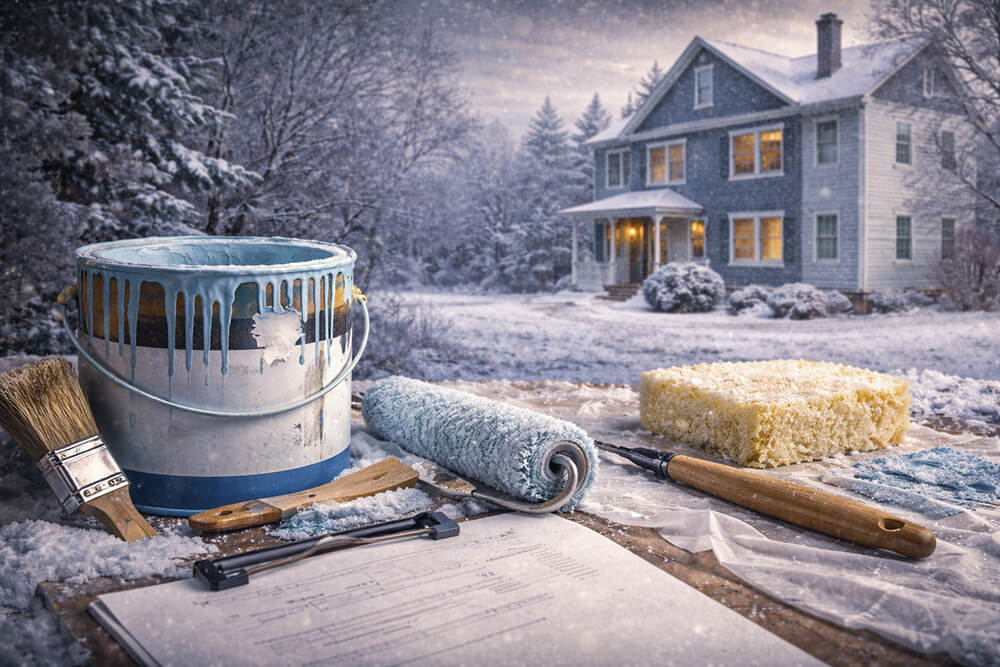
Exterior painting and Massachusetts winter do not usually belong in the same sentence. Cold air, freezing nights, moisture, and snow make conditions unpredictable. Yet homeowners in Gardner sometimes consider late-season painting due to scheduling, property sales, or urgent repairs.
The question is not just whether you can paint in winter. It is whether the preparation is done correctly.
If prep is skipped or rushed, even high-quality paint will struggle to hold up against New England weather.
Let’s talk about what truly needs to happen before exterior paint touches your siding during colder months.
Step One: Check Temperature Stability, Not Just the Forecast
Massachusetts winters fluctuate. A 48°F afternoon may drop below freezing overnight. Paint needs stable curing conditions, not just a single warm day.
Most exterior products require:
- Surface temperatures above 35–50°F depending on formulation
- No frost for at least 24 hours
- No precipitation during curing
Surface temperature matters more than air temperature. Wood and siding can remain colder than the surrounding air.
This is why experienced professionals offering exterior house painting in Gardner, MA monitor both surface and ambient conditions before starting.
Step Two: Address Existing Paint Failure First
Cold weather magnifies existing problems. If paint is already cracked, flaking, or bubbling, applying new paint will not fix it.
Loose paint must be:
- Scraped completely
- Feather-sanded smooth
- Spot-primed properly
If you are unsure whether it is safe to coat over damaged areas, this guide explains the risks clearly:
Is it safe to paint over cracked or flaking paint in Massachusetts?
Skipping this step is one of the fastest ways to see peeling return by spring.
Step Three: Eliminate Moisture Before You Paint
Moisture is the biggest winter challenge.
Snow buildup, ice dams, clogged gutters, and condensation can trap water behind siding. Painting over damp wood often leads to blistering once temperatures rise.
Before winter painting:
- Check for ice dam damage
- Ensure gutters are draining properly
- Inspect caulking around windows and trim
- Confirm siding is completely dry
Professional residential painters in Gardner, MA often use moisture meters to confirm dryness before applying primer.
Step Four: Use Winter-Appropriate Materials
Not all exterior paint is formulated for colder temperatures.
Modern acrylic latex paints designed for lower temperature application are sometimes used during shoulder seasons, but even those have limits.
Primer choice also matters. Winter prep may require:
- Bonding primers for older surfaces
- Fast-drying formulas
- Products rated for low-temperature curing
Choosing the wrong material is a common reason winter projects fail.
Step Five: Understand Massachusetts Lead-Safe Requirements
Gardner has many homes built before 1978. Under federal and Massachusetts regulations, contractors must follow EPA Renovation, Repair, and Painting guidelines when disturbing potential lead-based paint.
Winter scraping and sanding still require:
- Proper containment
- Certified practices
- Safe debris handling
If you are evaluating contractors, it helps to understand qualification requirements. This resource explains it clearly:
Do you need any certifications to be a painter in Massachusetts?
Hiring trained professionals reduces both safety risks and long-term paint failure.
Step Six: Ask the Right Questions Before Hiring
Winter projects leave less room for error. Homeowners should ask:
- What temperature range will you work in?
- How do you test surface dryness?
- What products are you using?
- How do you handle overnight freezing risks?
If you are unsure what to discuss during consultations, this checklist helps guide the conversation:
What questions should I ask a house painter in Gardner, MA?
These discussions matter more during winter than in milder seasons.
Is Winter Exterior Painting in Gardner a Good Idea?
In most cases, late spring through early fall provides safer, more predictable results. Winter painting may work for small repairs or urgent projects when done carefully.
However, without thorough preparation, cold-weather painting often leads to:
- Premature peeling
- Adhesion failure
- Moisture blistering
- Shortened lifespan
That is why many homeowners wait for more stable conditions unless repairs cannot be postponed.
A Smarter Approach to Winter Painting Decisions
Exterior painting in Massachusetts winters is less about speed and more about precision. Temperature, moisture, surface condition, and product choice all play a role.
If you are considering exterior painting during colder months and want professional guidance tailored to your property, contact us today to discuss your options and schedule safely.