
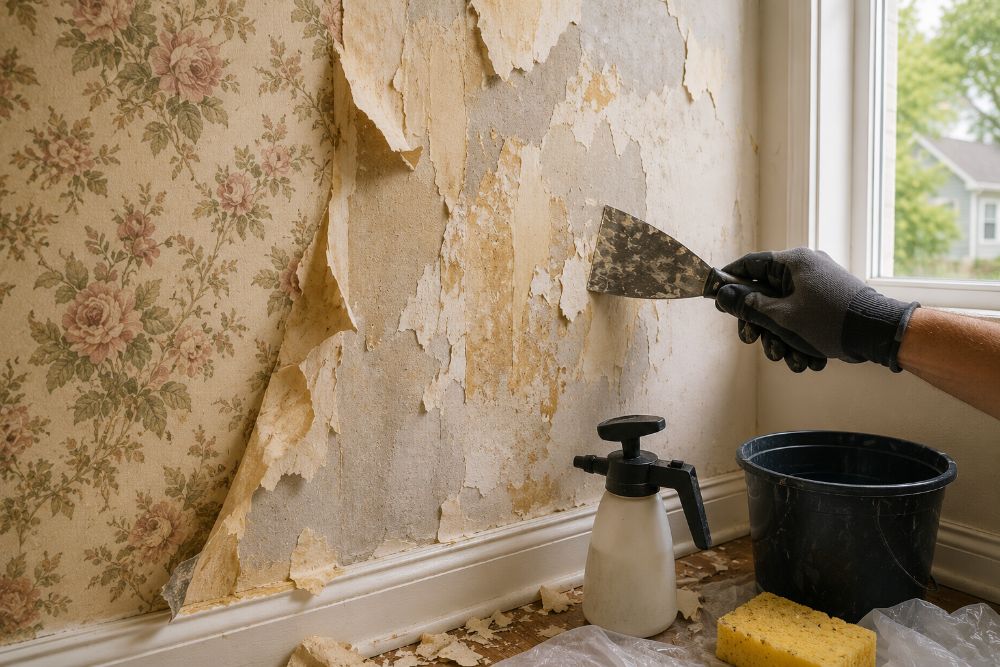
If you have ever tried peeling wallpaper only to end up with torn paper, sticky residue, and damaged drywall, you are not alone.
Some wallpapers practically fall off with steam. Others seem permanently bonded to the wall. In Massachusetts homes, especially older properties, the type of adhesive used decades ago often determines how difficult removal will be today.
Before grabbing a scraper and hoping for the best, it helps to understand what you are dealing with.
The Real Reason Wallpaper Becomes Stubborn
Wallpaper does not just stick because it was applied well. The adhesive formula plays a major role.
Over time, adhesives cure, harden, and bond more tightly with drywall or plaster. In humid environments, they can also re-bond and seal into the wall surface.
In Massachusetts, seasonal humidity swings can actually strengthen certain adhesive types, making them harder to dissolve later.
Common Adhesive Types Found in Massachusetts Homes
1. Traditional Paste Adhesive
Older homes often used cellulose-based or wheat-based paste. These are water-soluble but can become extremely stubborn after decades.
Steam and warm water may work, but it often requires repeated applications.
2. Vinyl-Over-Vinyl Adhesive
Vinyl wallpaper has a protective top layer that resists moisture. If that surface is not scored properly, water cannot penetrate the adhesive underneath.
This is one of the most common reasons homeowners struggle with removal.
If you are unsure whether it is better to remove or simply paint over the wallpaper, this guide provides helpful insight:
Wallpaper Removal vs. Painting Over Wallpaper: Which Option Saves More Money Long-Term in Massachusetts?
Making the right choice can save time and future repair costs.
3. Clay-Based Adhesive
Clay-based adhesives are strong and long-lasting. They bond tightly to drywall and often leave residue behind even after paper removal.
This type typically requires:
- Proper scoring
- Adhesive softening solutions
- Careful scraping
- Surface repair afterward
Improper removal can damage drywall paper beneath.
4. Pre-Pasted Wallpaper
Modern wallpapers often come pre-pasted. These are generally easier to remove if installed correctly. However, improper installation can cause uneven adhesion that leads to stubborn patches.
Why Massachusetts Walls Complicate Removal
Many Massachusetts homes, particularly older properties, have:
- Plaster walls instead of drywall
- Multiple wallpaper layers
- Painted-over wallpaper
- Walls repaired over decades
Attempting removal without identifying wall type can lead to gouges or surface tearing.
If you plan to repaint after removal, understanding proper prep steps is essential. This resource explains what comes next:
Can You Paint After Removing Wallpaper? Tips for MA Homeowners
Painting too soon without proper repair can lead to visible flaws.
Signs You Should Consider Professional Help
Wallpaper removal becomes especially challenging when:
- Paper tears into small fragments
- Adhesive residue remains sticky after washing
- Multiple wallpaper layers exist
- Walls begin to chip or crumble
- Mold or moisture damage is present
In these cases, hiring experienced wallpaper removal contractors Gardner MA can prevent costly drywall repair.
Professional removal often includes:
- Adhesive testing
- Controlled scoring
- Steam or chemical solution application
- Surface repair before painting
Many homeowners who attempt removal themselves eventually call a wallpaper removal company Gardner MA to correct damage.
Can You Remove Wallpaper Yourself?
It depends on the adhesive type and wall condition.
DIY removal may work when:
- Wallpaper is newer
- Walls are standard drywall
- Adhesive responds well to moisture
However, aggressive scraping can damage drywall paper, requiring patching and sanding.
Homeowners searching for professional wallpaper removal Gardner MA services often find that careful removal protects long-term wall quality.
What Happens After Wallpaper Removal?
Even after paper is removed, adhesive residue usually remains.
Proper steps include:
- Cleaning residue thoroughly
- Light sanding
- Priming before painting
- Repairing surface imperfections
Skipping these steps often leads to peeling paint or uneven finishes later.
A qualified wallpaper removal service Gardner MA typically handles both removal and surface preparation before painting begins.
A Practical Approach Before You Start
Before attempting removal, ask:
- How old is the wallpaper?
- Is it vinyl-coated?
- Are there multiple layers?
- Is the wall drywall or plaster?
- Has it been painted over?
Understanding these factors helps determine whether you can handle the job safely or should hire wallpaper removal contractors Gardner MA for professional assistance.
Final Thoughts
Some wallpapers refuse to come off because of the adhesive used, the wall type underneath, or decades of environmental changes. Massachusetts homes, particularly older ones, often present unique challenges during removal.
If you are dealing with stubborn wallpaper and want to protect your walls from damage, contact us today to discuss professional removal options and ensure your surfaces are prepared correctly.