
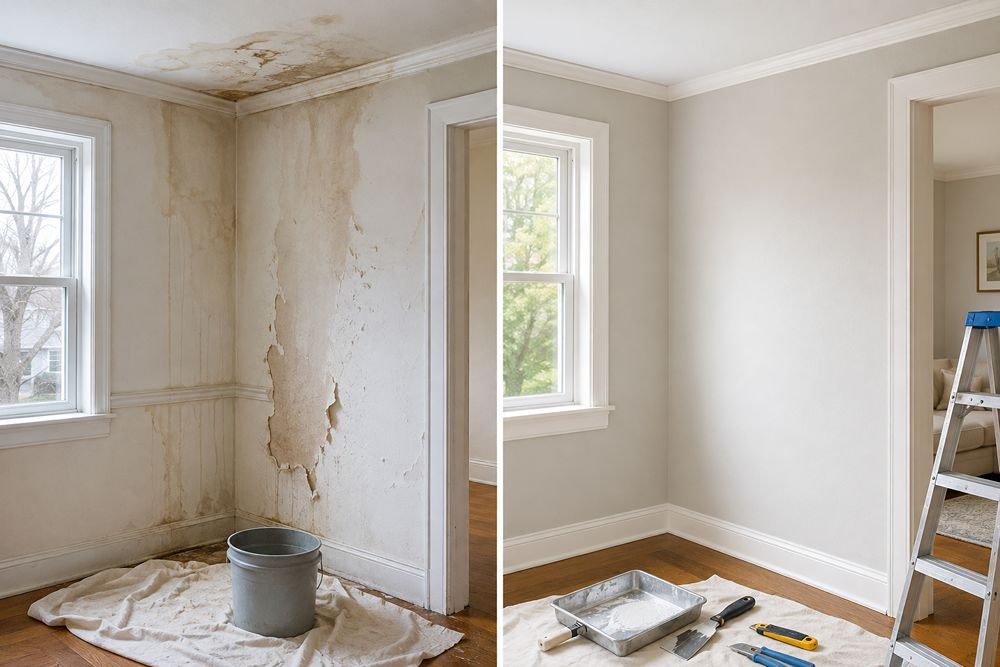
A brown stain on the ceiling or a soft spot on the wall is often the first sign that water has found its way into your home. Whether the source is a leaking roof after a winter storm or a burst plumbing pipe, many homeowners ask the same question:
Can the drywall be repaired, or does it need to be replaced?
The answer depends on how much water the drywall absorbed, how long it stayed wet, and whether hidden damage has already developed. Here’s what Massachusetts homeowners should know before deciding on the next step.
The First Priority: Stop the Water
Common causes include:
- Roof leaks after heavy snow or rain
- Burst or leaking plumbing pipes
- Overflowing appliances
- Window or flashing leaks
Repairing drywall before solving the leak almost always leads to the same damage returning.
Can Water-Damaged Drywall Be Repaired?
Drywall can often be repaired when:
- The leak was discovered quickly.
- The drywall dried completely.
- The damage is limited to a small area.
- There is no mold growth.
- The drywall has not become soft or swollen.
Minor staining may only require patching, sealing, and repainting once the surface is fully dry.
Professional Drywall Repair in Gardner MA services usually begin by evaluating the condition of both the drywall and the framing behind it.
When Replacement Is the Better Option
Replacement is usually recommended when:
- Drywall is sagging.
- The gypsum core has softened.
- Mold is present.
- Water remained trapped for more than 24 to 48 hours.
- The ceiling has started to bow.
In these situations, replacing the affected section helps restore both appearance and structural integrity.
If you’re unsure which option makes the most sense, this guide explains the differences in more detail:
Drywall Repair vs Replacement: Which Is Right for Your Massachusetts Home?
Understanding when replacement is necessary can prevent recurring problems.
Signs the Damage Is Worse Than It Looks
Watch for:
- Yellow or brown ceiling stains
- Bubbling paint
- Crumbling drywall edges
- Musty odors
- Loose drywall tape
- Hairline cracks around the damaged area
These symptoms may indicate moisture behind the visible surface.
Experienced drywall repair services Massachusetts professionals often use moisture meters to determine whether hidden water remains before beginning repairs.
Roof Leaks vs Plumbing Leaks
Roof Leaks
Plumbing Leaks
Regardless of the source, drying the affected area completely is critical before repairs begin.
Don't Paint Over Water Damage Too Soon
However, painting before the surface has completely dried or before stains are properly sealed can cause discoloration to reappear.
If painting is part of your restoration project, this homeowner guide explains the process from start to finish:
Painting Services in Massachusetts: A Homeowner’s Complete Guide
Proper preparation helps ensure the repaired area blends with the surrounding wall.
Could Water Damage Affect Nearby Materials?
Leaks can also damage:
- Wood trim
- Baseboards
- Flooring
- Insulation
- Ceiling framing
If water has reached surrounding wood components, repairs may extend beyond drywall.
This article explains why addressing wood damage before finishing work is so important:
Can Rotted Exterior Trim Be Repaired, or Does It Need Replacement in Massachusetts?
Although focused on exterior trim, the same principle applies damaged materials should be repaired before cosmetic improvements begin.
What Happens After the Drywall Is Repaired?
- Joint compound application
- Sanding
- Primer
- Paint
Using primer is especially important after water damage because it seals repaired surfaces and helps block old stains.
If you’re wondering whether primer is necessary, this guide offers useful advice:
Do You Need to Prime Walls Before Painting in Massachusetts Homes?
Primer helps create a consistent finish and improves paint adhesion.
Should You Attempt DIY Repairs?
However, larger repairs involving ceilings, hidden moisture, mold concerns, or structural damage are usually better handled by local drywall repair contractors in Gardner MA.
Professional repairs ensure damaged materials are removed safely, moisture is addressed properly, and the finished surface blends seamlessly with the surrounding wall.
Final Thoughts
The key is to repair the source of the leak first, allow everything to dry completely, and then restore the damaged area using the proper materials and techniques.
If you need help assessing water-damaged drywall after a roof or plumbing leak, contact us today to discuss your repair options and restore your home with confidence.