

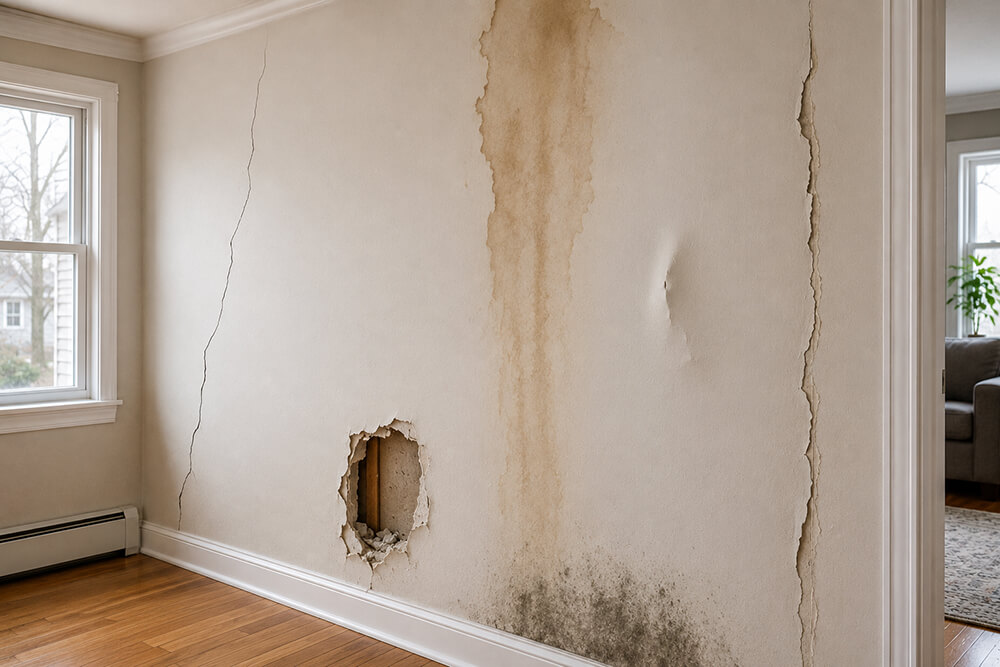
Drywall issues often start small. A hairline crack. A soft spot. A faint stain that seems harmless.
In Massachusetts homes, especially older properties, drywall problems can quietly develop due to seasonal humidity shifts, settling foundations, or moisture intrusion. Knowing when a simple patch is enough and when you need professional help can save time and prevent larger structural damage.
Let’s walk through the warning signs that indicate your drywall may need more than a quick fix.
1. Cracks That Keep Coming Back
Small cracks can be normal, especially in homes that settle over time. But cracks that reappear after patching often signal movement beneath the surface.
Common causes in Massachusetts include:
- Seasonal expansion and contraction
- Foundation settling
- Framing shifts during freeze-thaw cycles
If cracks widen or form around doors and windows, a drywall repair contractor Gardner MA can assess whether the issue is cosmetic or structural.
2. Water Stains or Soft Spots
Water damage is one of the most serious drywall concerns.
Signs include:
- Brown or yellow discoloration
- Bubbling paint
- Soft or spongy texture
- Sagging ceilings
Massachusetts experiences heavy snowfall and spring rain, which can expose roof or plumbing leaks. Water-damaged drywall should be evaluated quickly to prevent mold growth.
Before repainting over damaged areas, it helps to understand how drywall integrates with finishing work. This guide explains broader painting considerations:
Painting Services in Massachusetts: A Homeowner’s Complete Guide
Moisture issues should always be addressed before cosmetic repairs.
3. Nail Pops and Surface Bulges
If you notice small circular bumps or raised areas, these may be nail pops. They occur when fasteners loosen due to structural movement or humidity changes.
While minor nail pops can be repaired, repeated occurrences may indicate framing movement that requires professional evaluation.
A reliable drywall repair service Gardner MA can secure affected areas and restore a smooth finish.
4. Large Holes or Impact Damage
Accidents happen. Furniture bumps, door handle dents, or plumbing access repairs can leave holes behind.
Small holes can sometimes be patched with kits, but larger damage often requires:
- Reinforcement
- Mesh or backing support
- Proper joint compound layering
- Sanding and texture matching
Improper patching often becomes visible after painting, which is why professional repair ensures seamless results.
5. Peeling Tape or Separated Seams
Drywall seams are taped and finished during installation. Over time, humidity fluctuations in Massachusetts can cause tape to lift or seams to crack.
Visible seam lines or peeling tape usually require removal and reapplication rather than simple surface repair.
Understanding how drywall is constructed can clarify why seams fail. This article provides helpful context:
What’s the Difference Between Sheetrock and Drywall in Gardner, MA
Knowing the materials involved helps homeowners understand the repair process.
6. Persistent Mold Concerns
If drywall remains damp for extended periods, mold growth may occur behind the surface. Massachusetts building codes require safe remediation practices when mold or moisture damage is present.
In such cases, drywall replacement may be necessary rather than repair. This guide explores when each option makes sense:
Drywall Repair vs Replacement: Which Is Right for Your Massachusetts Home?
Addressing mold correctly protects both indoor air quality and structural integrity.
7. Sagging Ceilings
Ceiling drywall that sags or bows can indicate:
- Water damage
- Improper installation
- Fastener failure
- Structural movement
This is not a cosmetic issue. Sagging drywall may eventually detach and should be inspected by a professional promptly.
Homeowners searching for drywall repair Gardner MA services often discover ceiling issues require reinforcement and partial replacement rather than surface patching.
When Should You Call a Professional?
Consider professional evaluation when:
- Cracks exceed 1/8 inch
- Water damage is visible
- Mold odor is present
- Damage spans multiple areas
- Repairs continue failing
Massachusetts homes experience seasonal shifts that can stress interior materials. Addressing drywall damage early prevents larger, more costly issues later.
Final Thoughts
Drywall problems rarely fix themselves. Small cosmetic flaws can develop into larger structural or moisture-related concerns if ignored. Understanding the warning signs helps homeowners act before damage spreads.
If you suspect your drywall needs professional attention, contact us today to schedule an assessment and restore your walls properly.